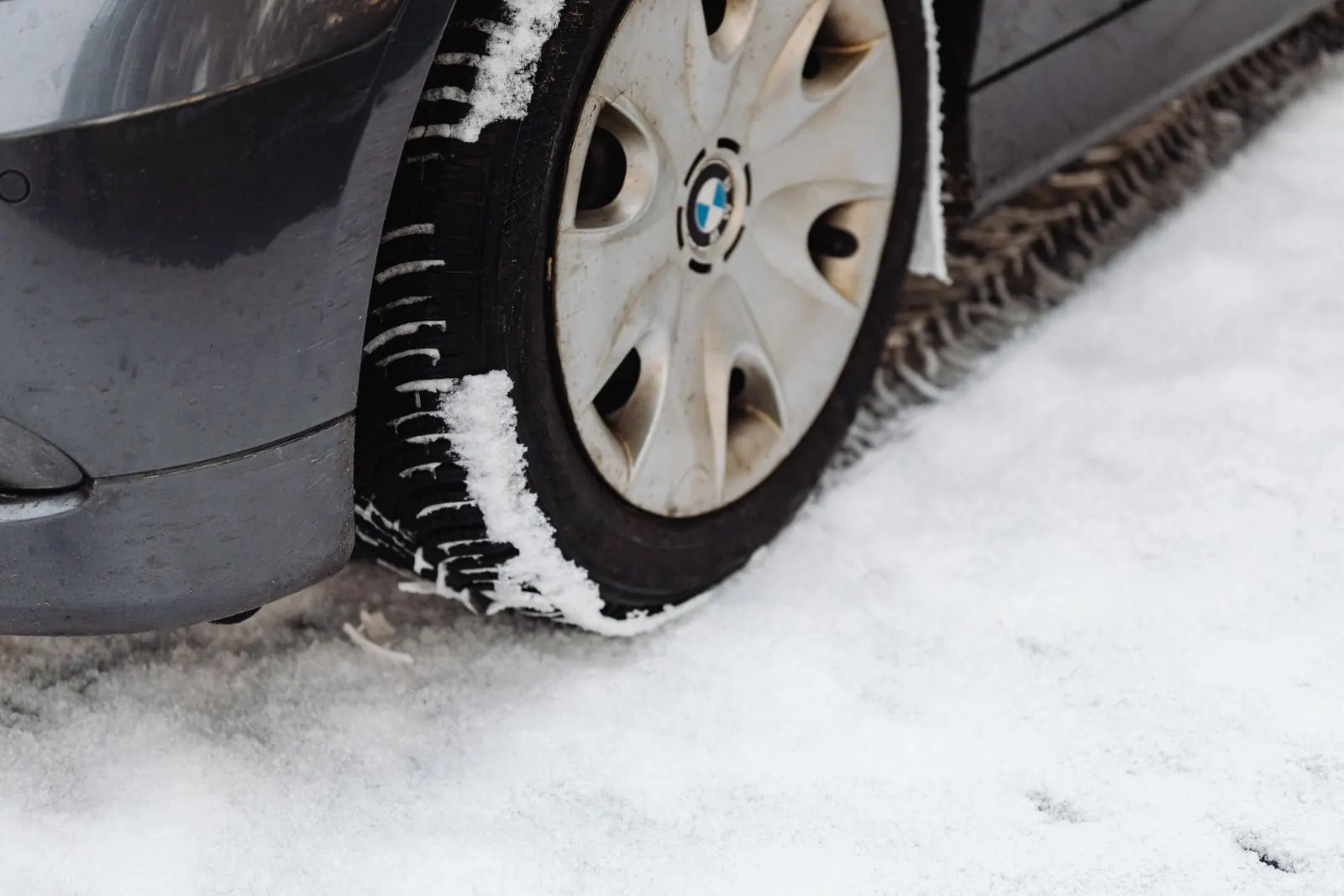
The Short Answer: Follow the 7°C Line
Put your winter tires on once daytime highs are consistently below 7°C, and take them off once they're consistently above it. In Aurora and the rest of York Region, the fall switch usually lands in mid-to-late November, and the spring switch in April. The first snowfall is the wrong signal — by then you've already been driving on hardened rubber for a few weeks, and every shop in town is booked solid.
Ontario doesn't set a legal date for winter tires, so the timing is up to you. The 7°C rule of thumb is what tire manufacturers use, and it's the same guidance we give every driver who books a changeover with us.
Why 7°C Matters More Than Snow
All-season tires use a rubber compound designed for mild and warm weather. Below about 7°C it starts to stiffen, and a stiff tire grips cold pavement poorly — dry or not. Winter tires use a softer compound that stays flexible in the cold, plus deep tread blocks and thousands of small slits (called sipes) that bite into snow and slush.
That's why the switch is about temperature, not precipitation. A frosty, dry morning on Wellington Street or a cold commute down Highway 404 is exactly where an all-season tire starts losing grip, even with no snow in sight. Ontario's government notes that winter tires can shorten braking distances by as much as 25% in winter conditions.
To make sure a tire is actually a winter tire, look for the three-peak mountain snowflake symbol on the sidewall. That's the marking the province points drivers to for tires designed for severe snow. An "M+S" (mud and snow) marking on its own doesn't mean the same thing.
Fall: When to Book Your Winter Tire Changeover
Watch the forecast through late October and early November. Once the daytime highs in the 10-day forecast stop climbing back above 7°C, it's time. For most years in York Region, that means booking in early November for a mid-November swap.
- Book a week or two ahead. The first cold snap or snowfall sends every driver in Aurora, Newmarket and Richmond Hill to the phone at once, and changeover wait times jump overnight.
- Check your tires before the appointment. Run the coin test or look at the tread wear indicators — a winter tire with very little tread left won't do its job, and it's better to find out in October than in a snowstorm.
- Check your insurance policy's dates. If you get a winter tire discount, your insurer may require the tires to be on by a certain date. More on that below.
If your winter tires are getting old or worn, now is also the time to shop for a new set — popular sizes sell out as the season gets going.
Spring: When to Take Winter Tires Off
Take them off once daytime temperatures stay above 7°C — usually sometime in April around Aurora. Southern Ontario often gets a late cold snap or a surprise snowfall in early April, so there's no prize for swapping in the first warm week of March.
Don't leave them on all summer, though. The same soft compound that grips in January wears quickly on hot pavement, and it gives up some braking and cornering performance on warm, dry roads. Swapping back promptly is the easiest way to get more seasons out of a set of winter tires.
If you'd rather not swap twice a year at all, all-weather tires carry the same three-peak mountain snowflake symbol and are designed to stay on year-round. We compare the options in our all-season vs. all-weather guide.
Check Your Insurer’s Winter Tire Dates
Ontario requires auto insurers to offer a discount on private passenger vehicle policies for drivers who use winter tires. The amount, and the rules for qualifying, are set by each insurer — some require all four tires to be on by a specific date in the fall and to stay on until a specific date in the spring. If you're claiming the discount, check your policy before you book so your changeover dates line up. We cover the discount in more detail in Are Winter Tires Mandatory in Ontario?.
What a Changeover Involves at Terron Tire
How long your visit takes depends on one thing: whether your winter tires have their own set of rims.
- On their own rims: a wheel swap. Your summer or all-season wheels come off, your winter wheels go on, and every lug nut is torqued to spec with a calibrated tool.
- Sharing one set of rims: each tire has to be taken off the rim and the other set mounted in its place, then all four wheels are computer balanced. It's a longer visit — the same work as a new tire installation.
We don't offer tire storage, so you'll take your off-season set home with you — keep it somewhere cool, dry and out of direct sunlight. If you're weighing whether a second set of rims is worth it, see Winter Tires on Separate Rims: Is It Worth It?.
When the forecast hits the 7°C line, book your seasonal changeover at our Aurora shop — earlier is easier.
